

Short run & variable data
Digital printing in Lahore
No plates, no make-ready, no long minimums. The fastest route from an approved file to a finished job — and the only way to print variable data.
- Since 2017 Trading as a Lahore press
- Sample before production Nothing goes to plate unapproved
- Export-quality output Substrates and finishing to spec
- Pharma & food packaging Printed to your approved artwork
What we print
Digital printing products
- Business cards
- Flyers and leaflets
- Brochures
- Short-run boxes
- Short-run labels
- Posters
- Booklets and manuals
- Presentation folders
- Sample and mock-up packs
- Variable-data print (serial numbers, QR and DataMatrix codes)
When offset is the better answer
Above the break-even quantity, digital loses. There is no plate cost to amortise, so the unit price stays flat while offset keeps falling — and digital cannot match a Pantone spot colour exactly or carry the full finishing range. On a long run with a brand colour, offset wins.
Offset printingSpecifications
What we can produce
| Maximum sheet size | On request |
|---|---|
| Colours | CMYK process |
| Substrates | On request |
| Variable data | On request |
| Minimum order | No plate cost, so short runs are viable |
| Lead time | On request |
Figures shown as “on request” are confirmed with your quote — they depend on the size, board and finishing of your specific job, and we would rather give you the real number than a range we have to walk back.
How your job runs
Design, sampling, production
-
01
Design
Nothing is cut until the dieline is right.
See detail of the Design stage -
02
Sampling
Nothing is printed until you approve the sample.
See detail of the Sampling stage -
03
Production
Nothing ships until QC signs the batch.
See detail of the Production stage
Finishing
How it can be finished
Each finish changes cost, lead time and how the job survives handling. Follow any of them for a plain-English explanation.
Industries
Who we print this for
- Pharmaceutical Cartons, inserts, outserts and labels printed to your approved artwork, with the version control, sampling and…
- Retail & e-commerce Mailer boxes, branded shippers, tape, tags and inserts that make unboxing part of the product rather…
- Corporate Company profiles, annual reports, catalogues, stationery systems and gifting programmes — printed to one colour standard.
Our work
Recent jobs off the press
Work samples are available on request
Much of what we produce is under a client confidentiality agreement, and we publish nothing without written permission. Tell us your industry and we will send relevant samples — or a physical sample pack.
Digital printing in Lahore — short runs, versions and variable data
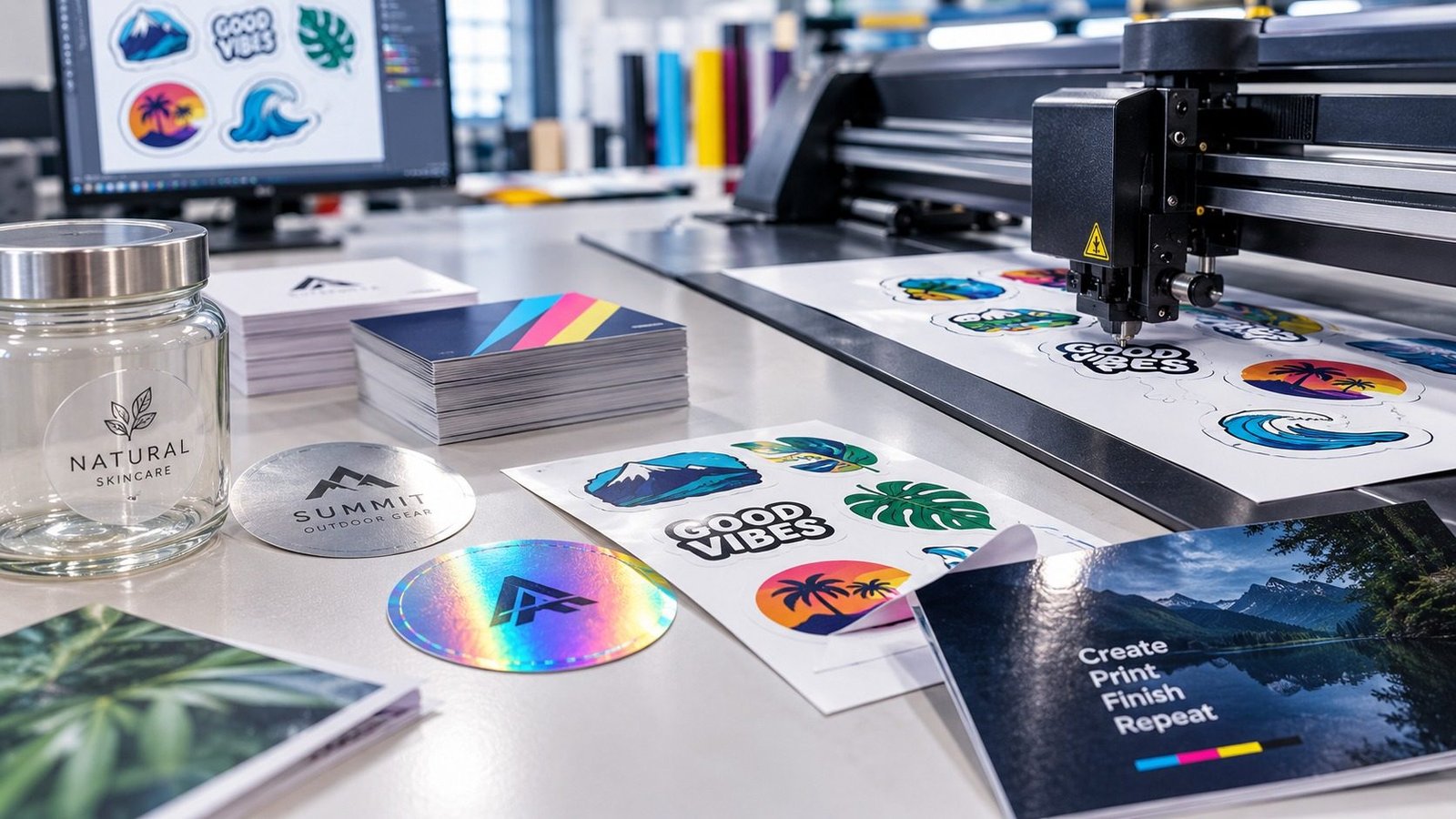
Digital printing puts your file on the substrate with no intermediate plate. There is nothing to image, nothing to mount and no make-ready, so the first sheet is also the first good sheet. That single difference is what makes short runs, prototypes and urgent deadlines viable at a price offset cannot reach.
It also makes two things possible that offset simply cannot do. The first is versioning: because there is no plate, printing fifty of one artwork and fifty of another costs the same as printing a hundred of one. Multi-language packs, regional variants and SKU-specific cartons stop being a cost problem. The second is variable data — every single sheet can carry a different serial number, QR code or GS1 DataMatrix. For pharmaceutical packaging moving toward serialisation, that is not a convenience but a requirement.
The honest trade-offs are colour and volume. Digital builds colour from process inks or toners, so a Pantone brand colour is simulated rather than matched — close, usually acceptable, but not exact. And with no fixed set-up cost to spread, the unit price does not fall as the run lengthens; past the break-even point offset becomes cheaper and keeps going. We will tell you where that point sits for your job rather than letting you find out on the invoice.
Digital is also how sampling works. Before an offset run we can print a full-colour sample on the production substrate, cut and assemble it, and put it in your hands — close enough to judge layout, size and finish, at a fraction of the cost of a wet proof. See the sampling stage for the full ladder from soft proof to offset pre-production sample.
Typical digital work here: business cards, flyers and brochures, short-run cartons and labels, booklets, presentation folders and sample packs — plus the prototypes that stop an expensive mistake reaching the offset press.
Finishing on digital work follows the same route as offset — lamination, die-cutting, folding and gluing all happen after printing, on the same equipment. That matters for planning: a hundred digitally printed cartons still need a cutting die, and if no die exists in that size one has to be made. The printing may take an afternoon while the die takes longer, so on short-run packaging it is usually the tooling, not the press, that sets the delivery date.
One practical caution. Because there is no plate, it is tempting to treat digital as just print it and skip prepress. We do not. Files still go through preflight, still need CMYK conversion, 3 mm bleed and outlined fonts, and still benefit from a proof — the failure modes are identical, only the set-up cost is different. Our artwork guidelines apply to digital work exactly as they do to offset.
Questions
Questions about digital printing
Anything not answered here, ask us directly — we would rather talk it through than have you guess.
It depends entirely on quantity. With no plates and no make-ready there is no set-up cost to pay, so short runs are far cheaper than offset. But there is also no fixed cost to spread, so the unit price stays flat while offset keeps falling — past the break-even point offset becomes cheaper.
Two real ones. Colour is built from process inks, so a Pantone brand colour is simulated rather than matched exactly. And the finishing range is narrower than offset — some foiling and specialist coatings are not available. On long runs it is also dearer per unit.
Every sheet in the run can carry different content — a serial number, a QR code, a GS1 DataMatrix, a name. Offset cannot do this at all, because every sheet comes off the same plate. It is what makes serialised pharmaceutical packs and personalised print possible.
Smooth, coated stocks generally reproduce best, because the toner or ink sits on a flat surface. Heavily textured and some uncoated stocks can show patchy coverage in large solid areas. If your job needs a particular stock, we will print a sample on it before committing.
There is no plate cost, so genuinely short runs are viable — often a handful of units for a prototype. The practical minimum is whatever makes sense to set up and deliver rather than a fixed number.
It is the fastest route from an approved file to a finished job, because there is nothing to image or mount. Finishing — lamination, die-cutting, folding — still takes its own time, so the whole job is not instant even when the printing is.
Yes, and at no extra plate cost. Printing fifty of one artwork and fifty of another costs the same as a hundred of one, which makes multi-language and multi-SKU packs practical.
Related
Other services
Offset printing
Cartons, catalogues, brochures, labels and stationery. The right process above break-even quantity: lower unit cost, exact Pantone matching, the widest finishing range.
Learn more about Offset printingCommercial printing
Business cards, letterheads, bill books, brochures, catalogues, company profiles, diaries and calendars.
Learn more about Commercial printingLabels & stickers
Self-adhesive, roll, sheet, vinyl, transparent, hologram and barcode labels. Contour-cut to any shape, from a hundred to a hundred thousand.
Learn more about Labels & stickersSend us your artwork. We’ll quote today.
Quantity, size, substrate, colours and finishing — with those five details most jobs are quoted the same working day.
Or call 0327 2777728